
In the world of celebrations, few things can captivate the senses as beautifully as a custom cake. Whether for a wedding, birthday, or corporate event, a well-designed cake is often the centerpiece, the showstopper, and the focal point of the celebration. However, the process of creating a custom cake involves far more than just mixing flour and sugar. It’s an art form that requires creativity, skill, precision, and a deep understanding of the client’s vision.
In this post, we’ll take you through the fascinating journey of designing a custom cake, from the initial concept to the final creation. Get ready to uncover the behind-the-scenes work that goes into making a cake that’s not only visually stunning but also deliciously unforgettable.
1. The Initial Consultation: Understanding Your Vision
The first step in designing a custom cake begins with the consultation. This is where the magic starts, and it’s also one of the most crucial stages of the entire process. The goal of this phase is to truly understand the client’s vision — their preferences, style, and the overall theme of their event.
Whether it’s a bride with a specific vision for her wedding or a parent seeking a cake for their child’s birthday, the consultation is the foundation for all the decisions that follow. During this session, several key questions are addressed:
- What is the occasion?
A wedding cake will be vastly different from a birthday cake or a corporate event cake. Understanding the significance of the occasion helps the designer tailor the cake to reflect the event’s style and mood. - What is the event theme or color palette?
Is the wedding modern or vintage? Is the birthday party whimsical or elegant? Understanding the theme and color scheme allows the designer to create a cake that complements the décor and overall vibe of the event. - What is the desired flavor profile?
Some clients may already have a clear preference for the flavor of their cake. Others may be more open to suggestions based on the theme or season. Whether it’s a rich chocolate cake, a fruity lemon flavor, or a delicate vanilla sponge, choosing the right flavor is a crucial aspect of the custom cake process. - Any special design requests?
This is where the creativity flows. Clients might have specific ideas in mind for the design, such as hand-painted elements, edible flowers, or intricate sugar work. Some might even bring inspiration photos or sketches that help guide the design process.
At this stage, the cake designer listens attentively, takes detailed notes, and begins to visualize the cake in their mind’s eye.
2. Translating the Vision: Sketches and Design Concepts
Once the consultation is complete and the designer has a solid understanding of the client’s preferences, the next step is to bring the vision to life in the form of a design concept.
This phase involves sketching the cake design based on the details discussed. The designer translates the client’s ideas into a tangible plan that includes:
- Shape and structure: Will the cake be tiered or a single-layer masterpiece? Does the design require sharp edges, or should it have a soft, rounded look? The structure of the cake is essential to its overall design and aesthetic.
- Decorative elements: This includes any specific decorations such as fondant flowers, edible lace, intricate piping, or sugar art. The designer will decide on the appropriate techniques for creating these elements to ensure they are both beautiful and edible.
- Color palette: Based on the event theme, the designer will select the colors that will be incorporated into the cake. Whether it’s a soft pastel wedding theme or bold, vibrant colors for a birthday party, the color palette plays a significant role in setting the tone.
- Textures and finishes: A custom cake is not just about how it looks but also how it feels. The cake designer will decide on different textures and finishes, such as smooth fondant, textured buttercream, or even hand-painted details.
During this stage, the client will typically be presented with sketches or digital mock-ups to review. This step is crucial because it allows the client to see the design before the cake is created and gives them an opportunity to suggest any changes.
3. Selecting the Right Ingredients: Quality is Key
A custom cake is only as good as the ingredients used to make it. At this point, the cake designer will decide on the ingredients that will be used, ensuring that they meet the client’s expectations for taste and texture. This decision is influenced by:
- Flavor preferences: If the client has chosen specific flavors, the designer must select the best quality ingredients to bring those flavors to life. This might involve using fresh fruits, premium chocolate, or organic vanilla beans.
- Allergies or dietary restrictions: Some clients may have specific dietary needs, such as gluten-free, dairy-free, or vegan options. The designer must source specialty ingredients to ensure that the cake meets these requirements without compromising on taste or quality.
- Texture and moisture: Achieving the perfect texture is essential for a custom cake. Whether the client wants a light and airy sponge or a dense and rich cake, the designer will select the right combination of ingredients to achieve the desired texture and moisture.
The ingredients are carefully sourced, ensuring that each element of the cake is of the highest possible quality. This focus on quality is what sets a custom cake apart from standard store-bought cakes.
4. Baking the Cake: Crafting the Layers
Once the design concept is finalized and the ingredients are chosen, it’s time to bake the cake. This is the stage where the real magic happens. The cake designer carefully bakes each layer, ensuring that they are perfectly cooked and ready for the next phase of assembly.
Baking a custom cake is a highly skilled process that requires precision. The layers must be even, moist, and free from any imperfections. After baking, the cake is allowed to cool completely before it’s frosted and decorated.
At this stage, the designer also prepares the fillings and frostings that will be used between the layers. These can range from traditional buttercream to more exotic fillings like chocolate mousse, lemon curd, or fresh fruit compote.
5. Assembling and Decorating the Cake: Bringing the Design to Life
The assembly and decoration phase is where the cake truly comes together. This is a delicate process that requires a steady hand, a keen eye for detail, and plenty of patience.
- Stacking and structuring: If the cake is tiered, the designer will stack each layer, ensuring that they are level and secure. This step also involves adding any necessary support structures, such as dowels, to prevent the tiers from collapsing.
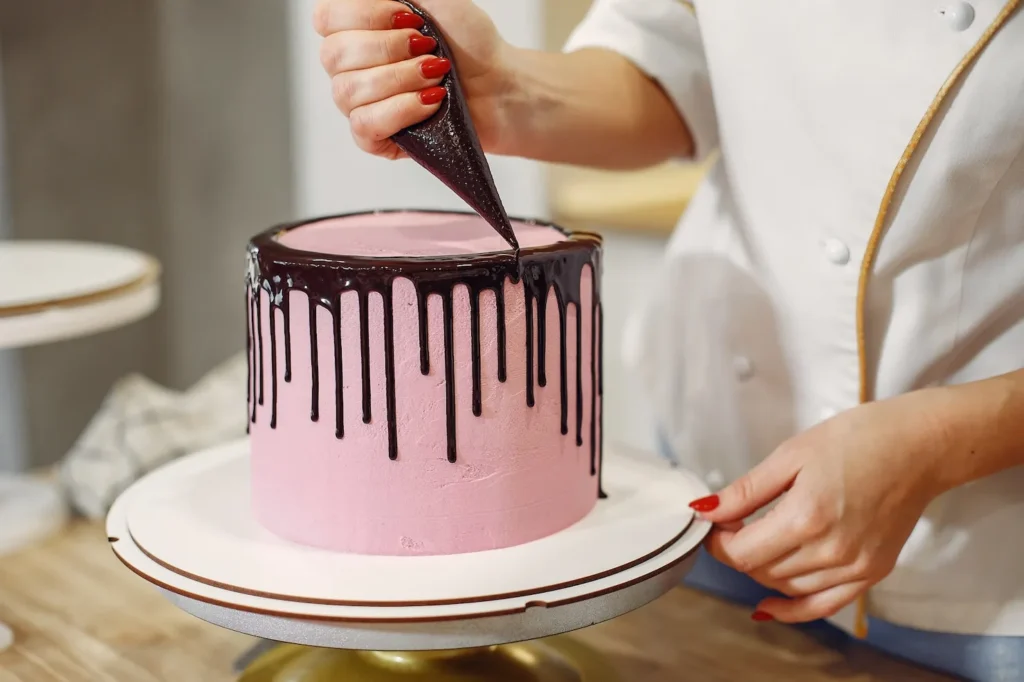
- Frosting and covering: The cake is then covered with a smooth layer of frosting or fondant, depending on the design. Some cakes may require intricate piping or airbrushing techniques to add texture or color.
- Adding decorative elements: This is where the design truly comes to life. Whether it’s hand-painted designs, edible gold leaf, sugar flowers, or custom toppers, the designer will carefully add these finishing touches to bring the vision to life.
- Final touches: The final details are often the most intricate and time-consuming. From adding delicate sugar petals to arranging fresh flowers, the last step involves ensuring that every aspect of the cake is perfect.
6. The Final Reveal: A Beautiful Masterpiece
After hours of hard work, the custom cake is finally ready for the big reveal. Whether it’s delivered to the venue or picked up by the client, the cake is always handled with the utmost care. The cake is a work of art, crafted to not only look stunning but also taste amazing.
At this point, the designer takes a moment to step back and appreciate the fruit of their labor — a cake that’s a true reflection of the client’s vision, made with skill, passion, and dedication.
Conclusion: The Magic of Custom Cakes
Designing a custom cake is an intricate and personalized process that requires more than just baking skills. It’s about understanding the client’s vision, combining creativity with technical skill, and using the finest ingredients to create something truly special. From the first consultation to the final decoration, every step in the process is about making the client’s celebration memorable with a cake that’s as beautiful as it is delicious.
A custom cake is not just a dessert; it’s a centerpiece, an experience, and an expression of creativity. Whether you’re celebrating a wedding, a birthday, or any special occasion, the journey from concept to creation is what makes each custom cake a masterpiece.
If you’re planning your next event, let the art of cake design elevate your celebration to new heights. With MANA Patisserie’s expert designers, you can bring your dream cake to life, and we’ll ensure it’s a piece of art your guests will never forget.